
Casework and Infection Control: Spec'ing Healthcare and Veterinary Millwork for the Clean-Down
In healthcare and veterinary spaces, casework is a surface that gets cleaned down constantly. Seams, materials, and details decide whether it holds up — or harbors what it's supposed to keep out. Here's how to specify it.
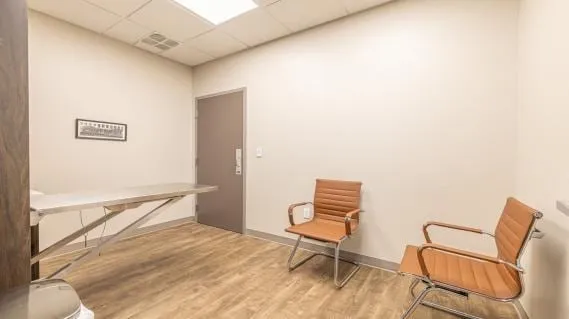
In most commercial interiors, casework is furniture. In healthcare and veterinary spaces, it’s a surface that gets cleaned down — often many times a day, with aggressive disinfectants, by staff who need to move fast. Whether that casework holds up or quietly works against the room comes down to decisions made when it’s specified: the materials, the seams, and the details that decide what can actually be wiped clean.
Here’s how to spec millwork for the clean-down.
Start with non-porous, cleanable surfaces
Infection control begins with materials that don’t give contaminants anywhere to live. Porous or unsealed surfaces absorb moisture and hold residue no wipe-down fully removes.
- Solid surface is the workhorse for tops, especially where an integrated sink bowl eliminates the seam between basin and counter entirely. It’s non-porous, renewable, and takes repeated disinfection.
- High-pressure laminate and phenolic serve well for cabinet bodies and doors when edges are fully sealed — the vulnerability in laminate is always an exposed or chipped edge, so edgebanding and detailing matter as much as the face material.
- Finishes and hardware are chosen for chemical resistance, because the surface is going to meet the same disinfectant over and over.
The seams are where it’s won or lost
A cleanable material with a bad joint isn’t cleanable. Every open seam, gap, and unsealed transition is a place contaminants collect and cleaning misses. Infection-control casework is detailed to remove those:
- Coved or sealed backsplashes where the counter meets the wall, so there’s no open line to trap moisture.
- Tight or seamless tops, with joints located and sealed to minimize the gap.
- Integrated sink bowls rather than drop-in basins with a rim and a caulk line that breaks down.
- Closed, sealed detailing — minimizing exposed fasteners and open corners the disinfectant can’t reach.
None of that is visible in a rendering. It’s in the shop drawings and the fabrication, which is why the detailing is worth specifying explicitly rather than leaving to assumption.
Detail for the people doing the cleaning
Cleaning staff can only disinfect what they can reach and what the surface lets them. Casework that fights the clean-down — exposed hardware, porous edges, tight inside corners, open toe kicks that collect debris — leaves spots that never get fully cleaned and slows the whole protocol. Spec for reach and wipe-down: accessible surfaces, sealed edges, hardware that cleans easily, and toe kicks and corners detailed so nothing accumulates where a cloth can’t follow.
Veterinary adds moisture and abuse to the mix
Veterinary casework follows the same infection-control logic, then adds heavy moisture, scratching, and frequent aggressive disinfection — especially around exam, treatment, and kennel-adjacent areas. That pushes material selection toward the more durable and moisture-resistant end: solid surface where water and disinfectant are constant, sealed and chemical-resistant cabinet construction, and hardware that survives the wet, high-cleaning environment. The reception and public areas can carry the brand; the working rooms are specified for the clean-down first.
The bottom line
In a healthcare or veterinary space, the casework is part of the room’s ability to stay clean. Non-porous materials, sealed and minimized seams, integrated sinks, and details built for the people wiping them down turn the millwork from a liability into an asset the clean-down protocol can rely on. We fabricate healthcare and veterinary casework to those standards in-house — if you’re specifying a clinical or veterinary space in Chicagoland, we can help get the details right before anything is built.
Frequently asked questions
- What materials are best for infection-control casework?
- Non-porous, cleanable surfaces perform best — solid surface for tops and integrated sinks, high-pressure laminate or phenolic for cabinet bodies with sealed edges, and chemical-resistant finishes that stand up to repeated disinfection. The goal is a surface with no open pores or unsealed seams for contaminants to sit in.
- Why do seams and joints matter so much in healthcare millwork?
- Every open seam, gap, or unsealed joint is a place contaminants collect and cleaning misses. Infection-control casework minimizes and seals joints — coved or sealed backsplashes, tight or seamless tops, integrated sink bowls, and closed detailing — so the surface can actually be wiped down completely.
- Does casework really affect a clean-down protocol?
- Yes. Cleaning staff can only disinfect what they can reach and what the surface allows. Casework with exposed fasteners, open toe kicks, porous edges, or hard-to-reach corners slows the clean-down and leaves spots that never get fully cleaned. Detailing for cleanability makes the protocol faster and more complete.
- Is veterinary casework specified differently from human healthcare?
- The infection-control principles are the same — non-porous, sealed, cleanable — but veterinary spaces add heavy moisture, scratching, and frequent aggressive disinfection. That pushes toward even more durable, chemical- and moisture-resistant materials and hardware, especially near exam, treatment, and kennel-adjacent areas.