
What to Include in a Millwork Bid Package
A complete millwork bid package gets you a faster, tighter quote. Here's the checklist — drawings, specs, finishes, hardware, schedule, and site access — commercial contractors and architects should send.
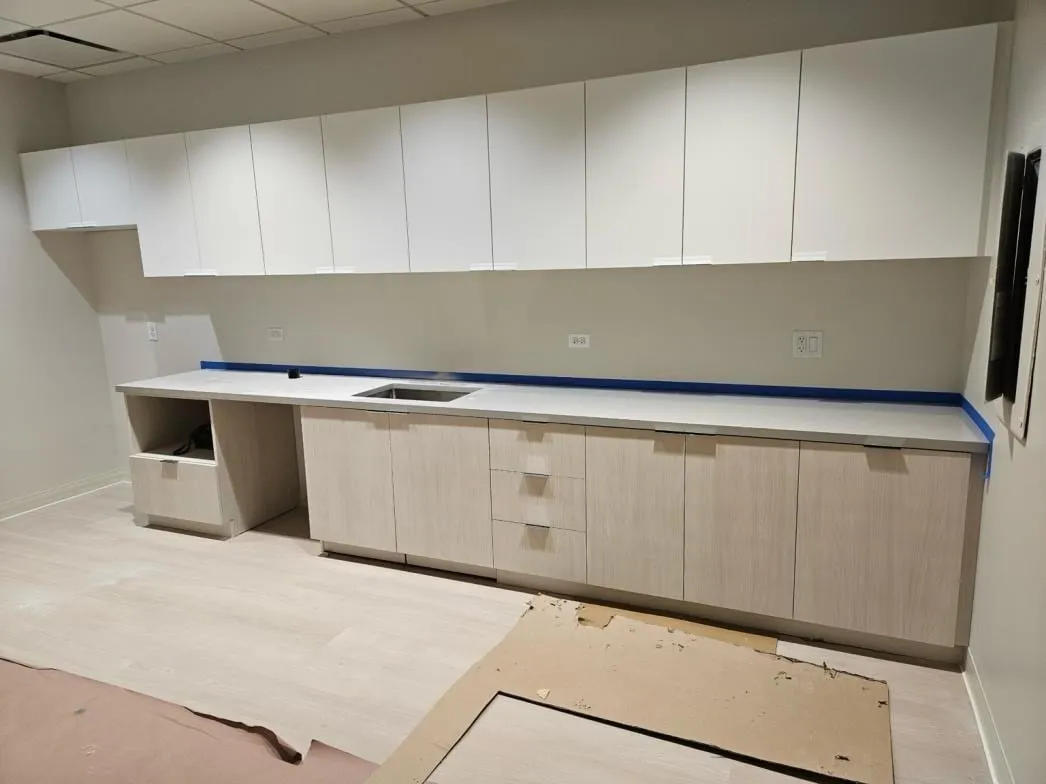
Estimating a commercial millwork scope is only as fast and accurate as the information it starts with. When a general contractor or architect sends a complete millwork bid package, the fabricator can scope tightly, price competitively, and commit to a schedule. When key pieces are missing, the estimator either pads the number to cover the unknowns or comes back with a stack of RFIs that slow the whole bid.
This guide is a practical bid package checklist — the drawings, specifications, finishes, and logistics that let a commercial millwork shop turn your project around quickly and precisely.
Why a complete millwork bid package matters
A millwork estimate is a series of assumptions about materials, quantities, grade, and effort. Every gap in the package is an assumption the estimator has to make — and each one is either priced conservatively (raising your number) or clarified later (delaying your bid). A complete package does the opposite: it removes guesswork, produces an apples-to-apples comparison across bidders, and gives you a price you can actually build around.
For the fabricator, completeness is what separates a two-day turnaround from a two-week one. For you, it’s the difference between a padded, caveat-heavy quote and a tight, committed one.
What belongs in the package
Whether the work is architectural millwork, casework, or custom cabinetry, most commercial packages share the same core components.
Architectural drawings
Send the full set, not just the millwork sheets: floor plans, elevations, reflected ceiling plans, and the large-scale millwork details and sections that actually define the scope. Include every addendum — bidding against a superseded drawing set is the fastest route to a change order. If your set isn’t final, partial drawings still work for a budget number; just say so. (Our guide on how to prepare drawings for a millwork bid covers this in depth.)
Millwork specifications
Specifications define the standard the work is built to — most importantly the AWI grade (Economy, Custom, or Premium), which drives both cost and quality. Call out the relevant sections (typically Division 06 for architectural millwork) and any performance requirements. “Custom Grade” and “Premium Grade” are not the same package or the same price.
Materials and finish selections
List laminates, wood species and veneers, solid surface, quartz, and paint by location — with manufacturer and color where known. Finishes drive cost as much as square footage, and a specified finish lets the shop quote the real material instead of a placeholder. If selections aren’t final, note which are locked and which are still open.
Hardware requirements
Hardware is easy to overlook and expensive to assume. Specify hinges, drawer slides, pulls, locks, grommets, and any specialty items — soft-close, heavy-duty, ADA-compliant, or security hardware. A slide or pull upgrade across a large casework package moves the number more than most people expect.
Project schedule and installation timeline
Tell the fabricator when shop drawings are due, when material needs to be on site, and the install window. Schedule affects sequencing, lead times, and whether phased delivery or overtime is required. A realistic timeline up front prevents a rushed — and padded — bid later.
Site information and access
Location and access shape delivery and installation costs. Note the project address (out-of-state work changes logistics), loading-dock and elevator access, secure-site or after-hours requirements, and any field conditions that affect measuring and install. A downtown high-rise and a suburban ground-floor build are priced very differently.
Special project requirements
Some sectors carry requirements that have to be spelled out in the package, because they change materials, detailing, and cost:
- Healthcare — cleanable, non-porous surfaces, integrated sinks, and infection-control detailing.
- Education — durable, high-traffic casework and impact-resistant materials, often on tight summer schedules.
- Retail & hospitality — brand-driven finishes, feature millwork, and display fixtures where appearance is the spec.
Flag these early so the estimator prices the right materials the first time. Pio builds across all of them as a commercial casework and custom millwork shop.
Common mistakes that delay estimating
A few recurring gaps slow nearly every bid:
- Sending only the millwork sheets — the estimator needs the architectural context to catch conflicts.
- Omitting the specification or AWI grade — forces a guess that’s either padded or wrong.
- Bidding against outdated drawings — missing addenda guarantee rework.
- Leaving finishes and hardware “TBD” with no direction — a placeholder price isn’t a real price.
- No schedule — the fabricator can’t confirm they can hit your dates.
How to get a faster, more accurate quote
To turn your bid around quickly and precisely:
- Send the complete, current drawing set with all addenda.
- Include the specification and AWI grade.
- Provide finish and hardware selections, and flag what’s still open.
- Share the schedule and site/access details up front.
- Ask questions early — a five-minute scope clarification beats a week of RFIs.
Even a partial package is workable for a budget number. The goal isn’t perfection; it’s fewer assumptions, fewer RFIs, and a tighter bid.
Ready to bid your project?
A complete millwork bid package is the single biggest factor in how fast and how accurately you get a number back. As an AWI Custom Grade, Chicago-area millwork contractor with in-house shop drawings and fabrication, Pio Custom Cabinetry turns complete packages around quickly — and stands behind the price.
Have a project going out to bid? Send us your drawings and scope — it goes straight to our estimating team, and we’ll get you a clear, competitive quote.
Frequently asked questions
- What should be included in a millwork bid package?
- A complete package has the full architectural drawing set (plans, elevations, reflected ceiling plans, and large-scale millwork details), the specification including the AWI grade, material and finish selections, hardware requirements, the project schedule and install window, and site/access information. Special-sector requirements — healthcare, education, retail — should be flagged up front.
- Why does an incomplete bid package slow down estimating?
- Every gap is an assumption the estimator has to make. Each one is either priced conservatively — padding your number — or clarified later through RFIs that delay the whole bid. A complete package removes the guesswork so the shop can scope tightly and turn the quote around quickly.
- Can I get a millwork bid from partial or early-stage drawings?
- Yes. Partial drawings are enough for a budget number — the estimator will flag the assumptions made so there are no surprises when the set is finalized. It's better to start the conversation early than to wait for a perfect package.
- How long does a commercial millwork quote take?
- It depends almost entirely on the completeness of the bid package. A complete, current set with specs, finishes, and schedule can be turned around in days; a package missing drawings, grade, or finish direction stalls while the estimator chases clarifications.