
Plastic Laminate vs. Wood Veneer: Choosing by Budget and Use
Both are workhorses of commercial millwork — but they earn their place in different rooms. A quick guide to picking the right surface for the job.
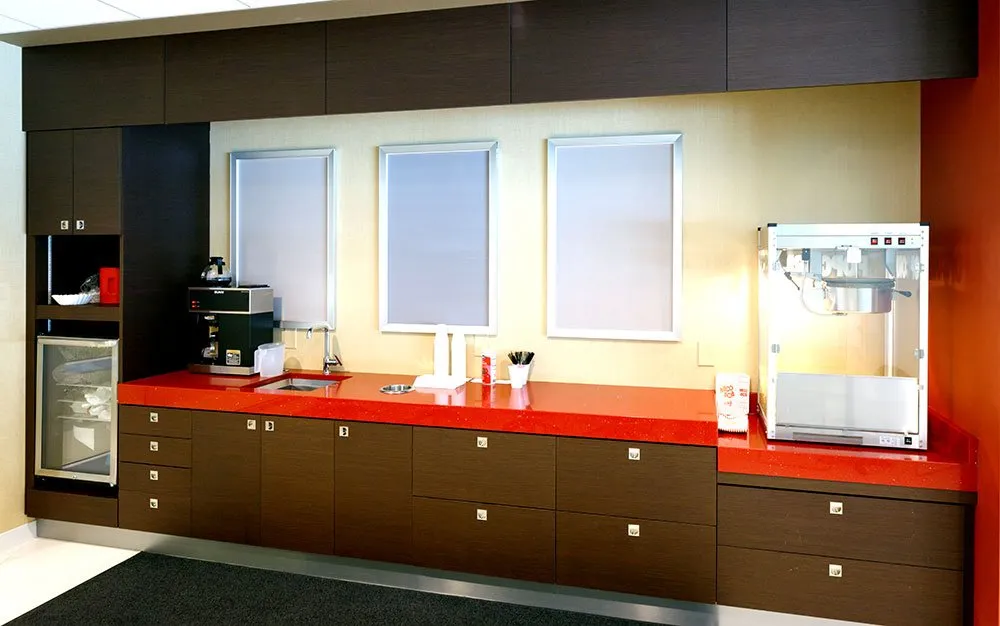
On most commercial projects you’re choosing between plastic laminate and wood veneer for the bulk of the casework — and the right answer usually isn’t “whichever looks nicer.” It’s a question of where the piece lives, how hard it gets used, what it has to communicate, and what the budget will carry. Here’s how we think about it.
Where plastic laminate wins
Plastic laminate is the practical workhorse: durable, easy to clean, available in a huge range of colors, woodgrains, and textures, and far more forgiving on budget and lead time. It’s the right call for break rooms and pantries, school and healthcare casework, back-of-house, and any high-traffic surface that needs to look sharp and wipe down. Properly cored and edgebanded, it shrugs off impact and moisture where it counts.
Where wood veneer earns its premium
Veneer is what you reach for when the millwork has to carry the room — reception desks, feature walls, executive offices, lobbies, and anywhere real wood grain sets the tone. The advantage isn’t just appearance; it’s the ability to sequence and match grain across a whole elevation so a feature reads as one continuous piece. That craftsmanship costs more in both material and labor, so it’s best spent where it’s seen and felt.
A simple way to decide
- Public and brand-facing, grain matters? Veneer.
- High-traffic, hygiene-critical, or budget-driven? Plastic laminate.
- Most projects? A mix — veneer on the focal points, laminate on the runs behind them.
The good news is you don’t have to choose blindly. Because we fabricate both in the same shop, we can detail a package that puts the spend where it shows and keeps the rest efficient — without a seam in quality between the two.
Not sure where the line should fall on your project? Talk to our team and we’ll help you spec it.